
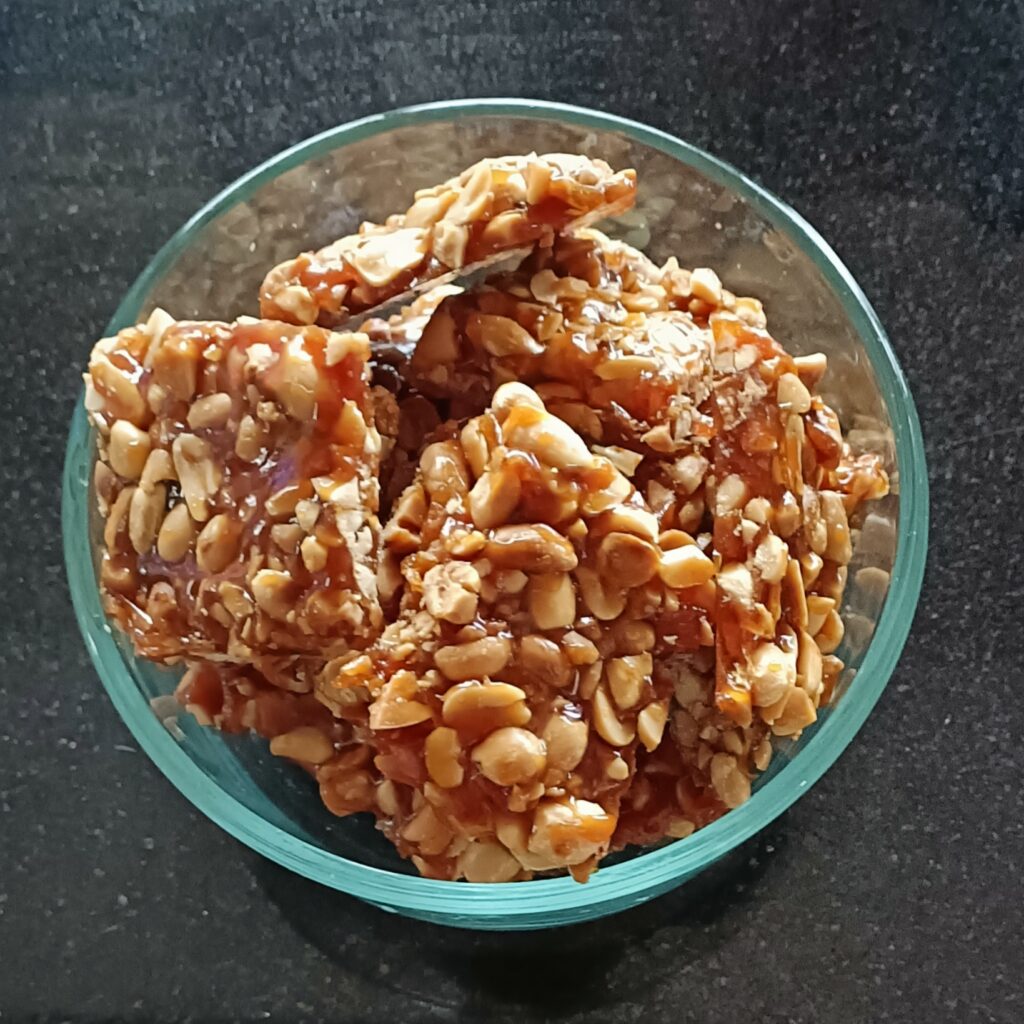
Shengdanyachi Chikki (Peanut Brittle)
Peanuts are a nutrient-rich food, packed with protein, healthy fats, fiber, vitamins, and minerals. There is a good amount of dietary fiber in peanuts, which aids in digestion and promotes satiety. However, they also contain phytic acid, which can reduce the absorption of some minerals. They are relatively low in carbohydrates but are calorie dense and so are a good source of energy, especially for young children. The high content of fat in peanuts, though unsaturated including monounsaturated and polyunsaturated fats (which are considered healthy), removes them from the list of ideal ingredients to manage weight. Peanuts are also rich in various vitamins and minerals, such as niacin, vitamin E, folate, manganese, magnesium, potassium, and phosphorus and in antioxidants like resveratrol, which can help protect against oxidative stress and inflammation. Some studies suggest that certain compounds in peanuts, like niacin, may play a role in brain health and cognitive function. The glycemic index (GI) of peanuts is low: around 14. This means that eating peanuts causes a slow and gradual increase in blood sugar levels, making them a good snack option. However, they are rich in fat so higher consumption of peanuts may add to the causes for diabetes. Peanuts are generally considered to have a near-neutral or slightly acidic pH. Raw peanuts have a pH of around 6.9, which is very close to neutral (pH 7), while roasted peanuts have a pH closer to 6.3, slightly more acidic than raw peanuts but still considered low-acid. While peanuts themselves are not acidic, they are considered “acid-forming” in the body. This means that after digestion, they can contribute to a more acidic environment in the body and should be consumed in limited quantities. Some individuals may experience acid reflux or heartburn after consuming peanuts, particularly those with GERD. This is because peanuts are higher in fat than some other nuts, and high-fat foods can sometimes trigger acid reflux. Jaggery, unlike refined sugar, contains a variety of minerals and vitamins, making it a more nutritious sweetener. It’s a good source of iron, calcium, magnesium, potassium, and phosphorus. Additionally, jaggery provides trace amounts of zinc, copper, and vitamins like A, B-complex, C, and E. The glycemic index (GI) of jaggery is 84.4, which places it in the high GI category. Foods with a high GI are digested and absorbed quickly, leading to a rapid spike in blood glucose levels.