Translate to your native language

Rasaayan

Bananas are among the most important food crops on the planet and are easily available all-round the year making them one of the world’s most commonly consumed fruits. Bananas are not only easy to digest but are also filling and nutritious. Eating a fill of bananas for breakfast as a meal in itself is one of the best ways to start the day. It’s also nature’s best fast food and best when eaten on an empty stomach. Like most other fruits, when we eat bananas in plenty accompanied by a good amount of water, they help digestion and improve bowel movement to a great extent.

Because bananas contain considerable amounts of fibre, potassium, vitamin B6, vitamin C, and various antioxidants and phytonutrients, they are an excellent food to improve overall health. Bananas have a relatively low glycemic index due to the high content of resistant starch and fibre, which makes the carbs in them enter your bloodstream more slowly preventing a spike in blood sugar. Bananas contain water-soluble fibre in the form of pectin, which binds food in the intestine and adds bulk to the stools, which may help prevent or cure constipation.

Both pectin and resistant starch not only support the growth of beneficial gut bacteria but also moderate the rise in blood sugar after a meal, breaking the myth that they are not good for diabetics. The resistant starch is fermented by bacteria in the large intestine improving gut health which in turn can help reduce depression and anxiety.

Bananas are especially rich in potassium, a mineral that promotes heart health and normal blood pressure. They are also rich in vitamin B6 and vitamin C as well as several antioxidants that help reduce the speed of aging and prevent the risk of heart disease.

Check out why smoothies are good for you in our “Smoothies and Breakfast Drinks” section.
Read More »

White Idli Chutney

This is a traditional chutney that is mostly served in restaurants as well. You can vary the amounts of dal and coconut to your taste and also add tamarind to it if you wish.

Read More »

Lobia Curry Punjabi Style -1 (Chawli beans/Black eyed peas)

Lobia promotes digestive health as they are a great source of soluble fiber which helps promote regularity and increase stool frequency in those with constipation. The fiber can also help prevent digestive disorders, such as acid reflux, hemorrhoids, and stomach ulcers. The soluble fiber present in lobia can also act as a prebiotic, stimulating the growth of the beneficial bacteria in the gut to help foster a healthy microbiome, which not only support digestive health but also help to reduce inflammation, enhance immune function, and reduce cholesterol levels.

Read More »

Chawli Curry (Black Eyed Beans Curry)

Chawli beans are often considered a staple in Indian cuisine and are cooked in various forms. They are incredibly nutrient-dense, packing plenty of fiber and protein into each serving and are also a good source of several important micronutrients, including folate, copper, thiamine, and iron. Moreover, chawli beans are high in polyphenols, which are compounds that act as antioxidants in the body to prevent cell damage and protect against disease. The soluble fiber in chawli beans forms a gel-like consistency and moves through the digestive tract slowly keeping you feeling full between meals and is said to help control belly fat and keep obesity at bay.

Read More »

Biranji with Saar and Chutney (Biryani type Rice with thin Curry and Chutney)

Many cultures consider rice to be a staple grain because it contains vital carbohydrates that provide the body energy even though it contains less protein than other cereals. Carbohydrates can keep you energized and satisfied and are important for fueling exercise. Rice, particularly white rice, generally gets digested easily because it is low in fat and fiber, and so it’s better to eat brown or semi-brown rice. Brown rice, especially, is an excellent source of many nutrients, including fiber, manganese, selenium, magnesium, and B vitamins. Toor dal, also known as arhar dal, red gram dal or pigeon pea, is a staple in many parts of India. It is protein-rich pulse that’s high in fiber and carbohydrates. It’s a good source of iron, calcium, and folic acid also contains vitamins C, E, K, and B complex. The relatively high amount of folic acid in it may help prevent birth defects in babies and the high protein and potassium content may help with muscle growth and blood pressure regulation. It’s low on the glycemic index, releasing energy slowly helping to keep us satiated for a longer time, so is good for diabetics. However, some people find that toor dal can trigger acidity or heartburn, particularly if they are prone to acid reflux. It’s always a good idea to soak toor dal for three to four hours before cooking to reduce reduce the phytic acid in it that can cause digestive issues. Adding a little masoor dal could also help with the acidity. Consuming large amounts of toor dal can overwhelm the digestive system. Combining toor dal with spicy foods can also exacerbate acidity, so it’s best to eat it in moderation and with less spicy accompaniments. Adding vegetables to a meal is one of the best ways of making the dish more nutritious.

Read More »

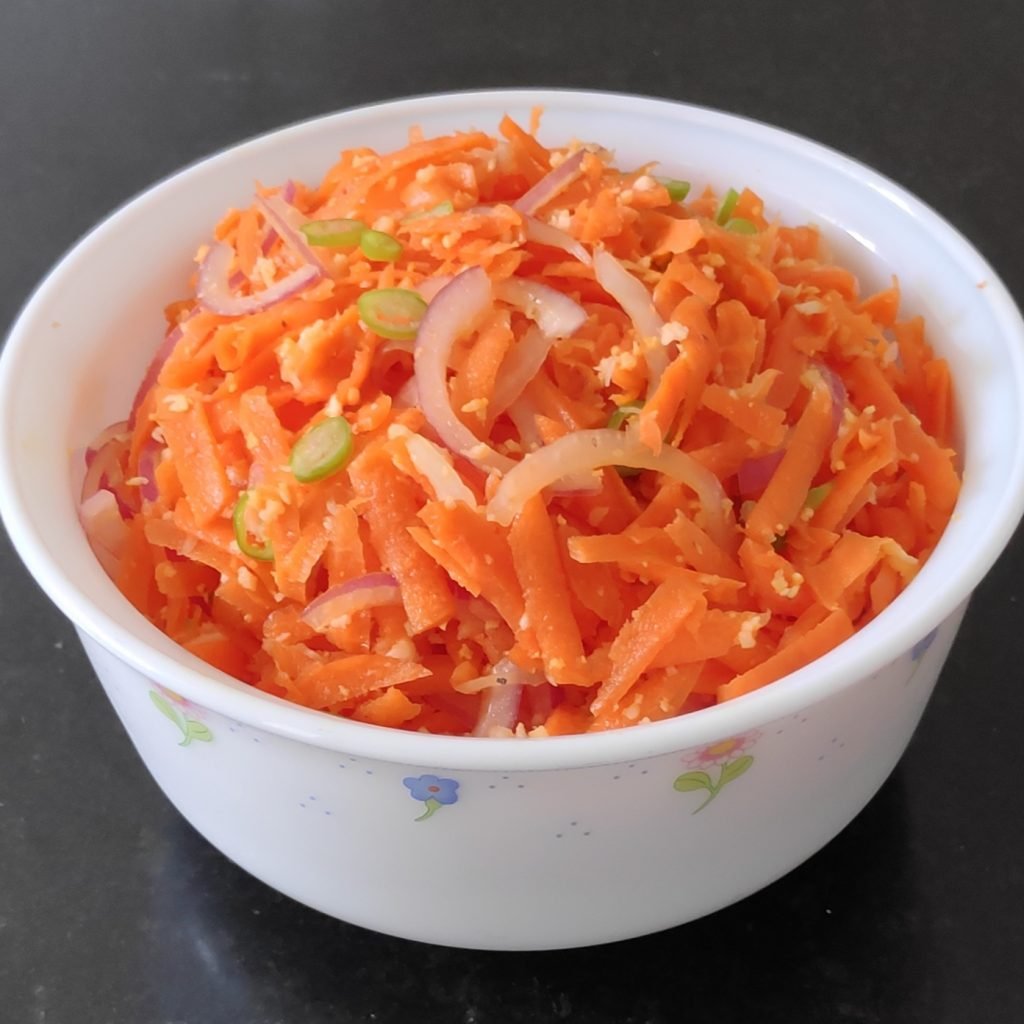
Gajarachi Koshimbir (Carrot Salad)

One-vegetable salads are a common part of Indian meals. Carrots are rich in vitamin A and contain high amounts of vitamins C and K. Vitamin A supports eye health, and vitamin C is necessary for the production of collagen, which strengthens skin. They also contain plant compounds called carotenoids, which act as antioxidants. Antioxidants protect your skin from damage by fighting unstable molecules called free radicals (which are responsible for aging.) The potassium and antioxidants in carrots help lower blood pressure and promote heart health. Compounds in carrot juice have even been shown to trigger cancer cell death in some test-tube studies. Apart from all these, as a rich source of vitamins A, B6, and C, carrots help strengthen your immune system.

Read More »

Tomato and Onion Koshimbir

Usually red when mature, tomatoes can also be eaten while they are still green, yellow or orange. It’s best to buy locally grown unripened tomatoes and keep them for a few days to allow them to ripen naturally as these taste better. Tomatoes are a good source of insoluble fibre, which is not digested by the body but helps in moving food through the digestive system and thus assisting bowel movement. Tomatoes are rich in antioxidants like Vitamin C, which help protect cells from damage caused by free radicals and improves the immune system. Lycopene, another antioxidant, found in large amounts in tomatoes may help reduce the risk of certain cancers. Beta carotene is another antioxidant found in tomatoes that often gives foods a yellow or orange hue. Beta carotene is converted into vitamin A in our body and is believed to help improve eyesight. Chlorogenic acid in tomatoes is a powerful antioxidant compound, which may lower blood pressure in people with elevated levels. Naringenin is a flavonoid found in tomato skin, which has been shown to decrease inflammation and protect against various diseases. Tomatoes also contain a good amount of potassium, which may help lower blood pressure and reduce the risk of heart disease. Vitamin K1 in tomatoes is important for blood clotting and bone health, and folate is important for normal tissue growth and cell function. Moreover, tomatoes are high in water content, which helps keep you hydrated.

Read More »

Wild Mango Sasam Raita

Mangoes are a great source of various nutrients, including vitamins A and C, folate, fiber, and copper. They are also relatively low in calories and fat. The body converts the beta-carotene in mangoes into vitamin A, which may help improve vision, skin health, and immune function. Vitamin C is a great antioxidant that may help reduce the rate of aging. The folate (a B vitamin) in mangoes assists cell growth and development, particularly during pregnancy. Mangoes also contain copper, a mineral that plays a role in energy production, nerve function, and immune health. The most ignored component in our nutrition is fibre which is very important for digestion and bowel movement. It also helps regulate blood sugar so is great for diabetics and mangoes are a good source of this dietary fiber. Coconut is high in fat and calories while moderate in carbs and protein. Most of the fats are medium-chain triglycerides (MCTs), which are absorbed intact in the small intestine and used by the body to produce energy. It’s the high content of manganese in coconut that not only supports enzyme function but also fat metabolism. The copper in coconut helps bone formation and heart health. Apart from manganese and copper, coconut is also rich in other minerals like selenium, phosphorus, potassium, and iron. Coconut contains a very high amount of insoluble fibre that doesn’t get digested but works to move food through the digestive system and helps bowel health.

Read More »
Shopping Basket